| Best suited to | Creators, businesses, teams, and agencies that need brand-aware creative production, social publishing, reporting, and SEO workflows. | Mid-market and enterprise organizations that require an AI-powered system of record for large digital-asset libraries and content supply chains. |
|---|
| Operating model | Uses separate brand workspaces containing structured Brand Kit context, media, profiles, posts, reports, and search projects. | Uses enterprise portals, Asset Bank, collections, metadata, modules, workflows, permissions, guidelines, Studio, and distribution integrations. |
|---|
| Multi-brand management | Each brand workspace keeps its Brand Kit, Media Library, profiles, schedules, content, and reports separate. | Supports multiple brands, portals, regions, departments, user groups, guidelines, collections, and granular access policies. |
|---|
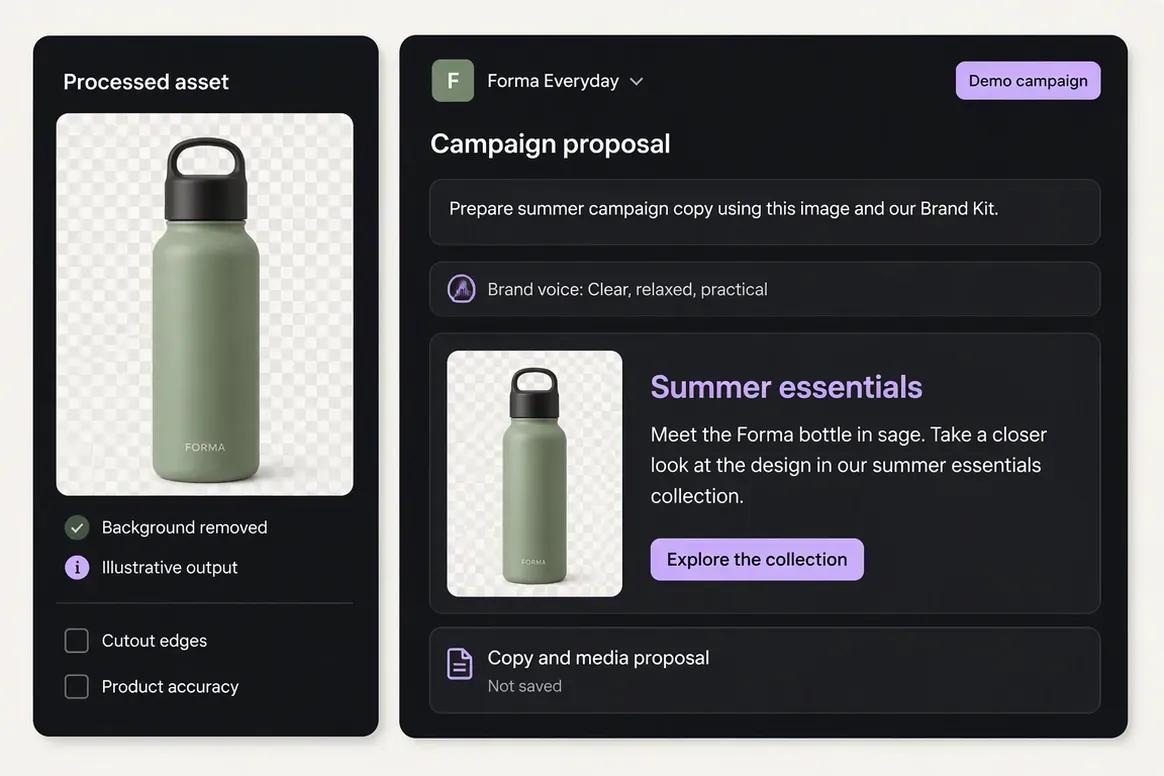
| Brand guidelines | Brand Kit information guides supported Copilot, social, visual, media, and SEO workflows. | Provides interactive Brand Guidelines connected to live DAM assets and governed brand resources. |
|---|
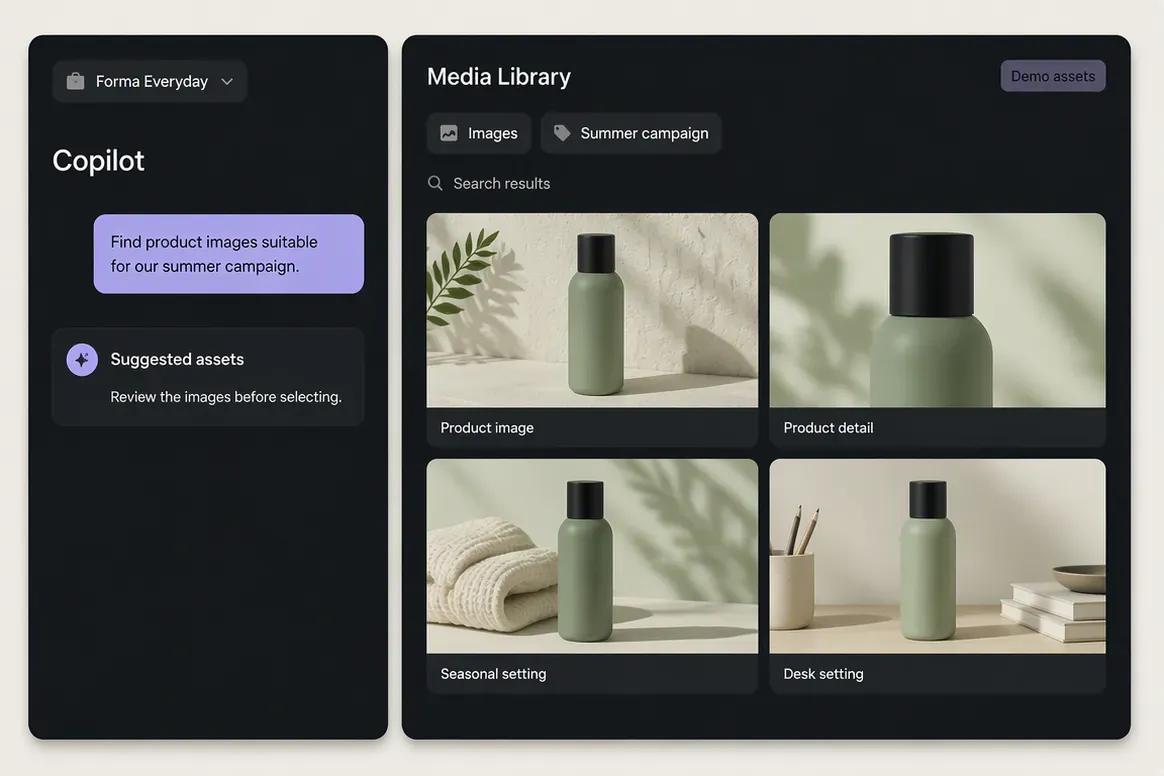
| AI assistant | Copilot can inspect available workspace information and prepare supported actions for confirmation. | AI Agents support enrichment, transformation, brand compliance, governance, metadata, localization, and other configured DAM workflows. |
|---|
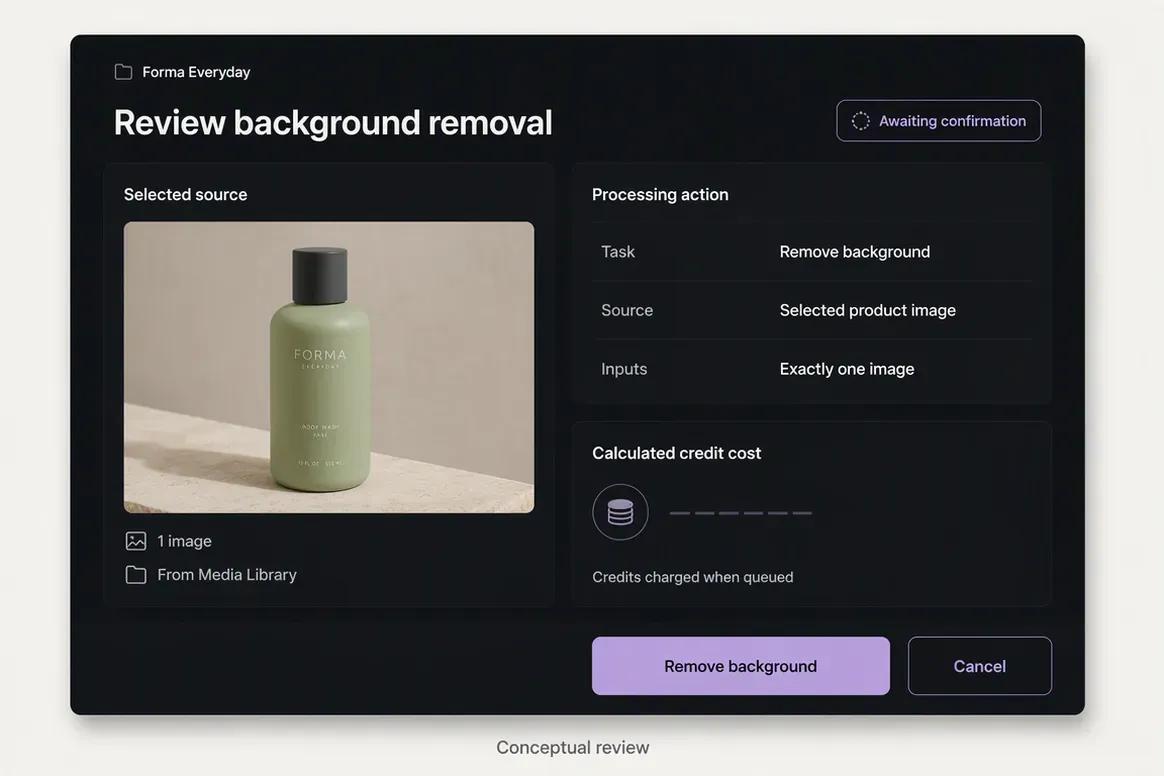
| AI action control | Supported workspace changes are presented for confirmation before execution. | AI Agents are configurable and human-led, operating within taxonomy, permissions, governance, and approved DAM workflows. |
|---|
| AI search | Media Library supports structured and semantic discovery inside each brand workspace. | Provides natural-language search, similarity search, search by image, OCR, face recognition, speech-to-text, and AI metadata. |
|---|
| AI visual generation | Provides native image generation with references and coordinated carousel generation. | AI focuses on transformation, enrichment, localization, reframing, background editing, and variations. Pure prompt-based generation remains more limited or emerging. |
|---|
| Moodboards | Can analyze image references and produce reusable visual direction. | A comparable native moodboard-analysis workflow was not verified. |
|---|
| Digital Asset Management | Media Library supports uploads, generated assets, search, processing, organization, and reuse by brand. | Provides enterprise DAM with metadata, taxonomy, versions, relationships, duplicates, rights, collections, archive, search, renditions, permissions, and controlled distribution. |
|---|
| Rights management | Enterprise-grade rights, license, embargo, and legal governance are not positioned as established advantages. | Provides reviewed rights, licenses, expiration, embargoes, regional or channel restrictions, approvals, watermarks, downloads, and asset history. |
|---|
| Metadata and governance | Supports asset organization and search within each selected brand. | Provides custom metadata, taxonomy, AI tagging, duplicate management, asset relationships, legal fields, versioning, and governance automation. |
|---|
| Studio templates | Provides focused creative generators and processing tools. | Studio provides locked image, video, GIF, print, and data-driven templates for controlled self-service production. |
|---|
| Creative workflows | Supports shared-content feedback and confirmation-based Copilot actions. | Content Workflow and Asset Workflow provide briefs, tasks, structured fields, comments, proofing, versions, deadlines, routing, and multi-stage approvals. |
|---|
| Media processing | Includes image and video background removal, resizing, reframing, palette extraction, color grading, and upscaling. | Provides smart crops, focal points, background editing, format conversion, compression, video transcoding, thumbnails, renditions, and Dynamic Asset Transformation. |
|---|
| Content delivery | Assets remain connected to supported marketing and social workflows. | Provides portals, collections, CDN, Dynamic Asset Transformation, CMS, PIM, ecommerce, retailer, website, and CX Omnichannel delivery. |
|---|
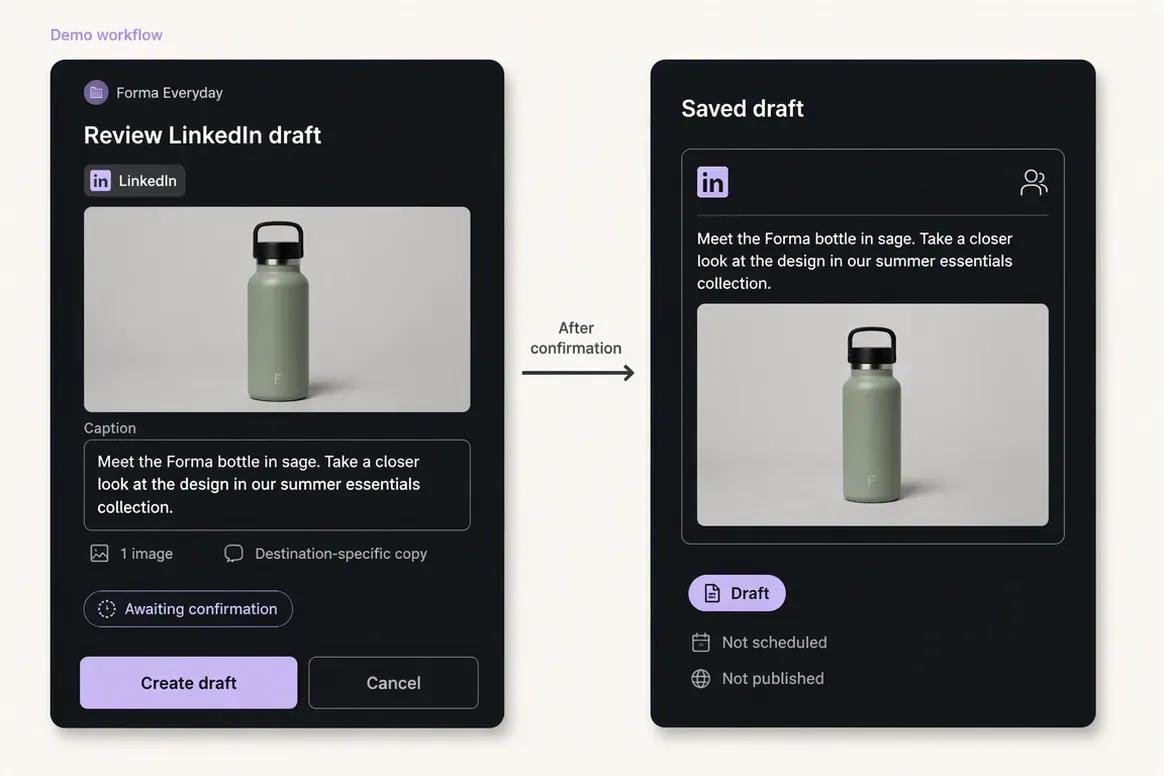
| Social publishing | Supports drafts, scheduling, immediate publishing, validation, queues, retries, and publication-status monitoring. | Native social scheduling, publishing queues, platform validation, and post-status management were not verified as core Bynder functions. |
|---|
| Social analytics | Provides available profile and post metrics from connected supported networks. | Provides asset, search, adoption, workflow, portal, storage, rights, and delivery analytics rather than native social-post analytics. |
|---|
| SEO content workflow | Supports researched article generation, evaluation, editing, reevaluation, and optimization. | DAM metadata and optimized asset delivery can support websites indirectly, but a native SEO article workflow was not verified. |
|---|
| API and integrations | Connects supported social, media, and marketing workflows inside Oolook. | Provides more than 160 reviewed integrations, REST APIs, OAuth, SDKs, webhooks, MCP, CDN, and Dynamic Asset Transformation APIs. |
|---|
| Enterprise governance | Enterprise plan details depend on current Oolook commercial terms. | Provides granular groups and roles, SSO, SCIM, audit capabilities, rights governance, retention, implementation, migration, support, and customer success. |
|---|
| Free access | Offers an available Free plan, with current limits loaded from the pricing API. | Does not offer a permanent Free plan or confirmed self-serve trial. A sales demo is available. |
|---|
| Pricing basis | Uses published standard plans that scale through workspaces, profiles, posts, storage, AI credits, reports, and support. | Uses custom quote-based packaging determined by users, storage, selected modules, usage, support, implementation, and contract terms. |
|---|